Are you a parent wondering if your child is on track—or a speech therapist searching for a clear, caregiver-friendly resource to support early communication? This speech and language development guide is the go-to tool for empowering families with the knowledge, strategies, and next steps they need to confidently support their child’s communication at home.
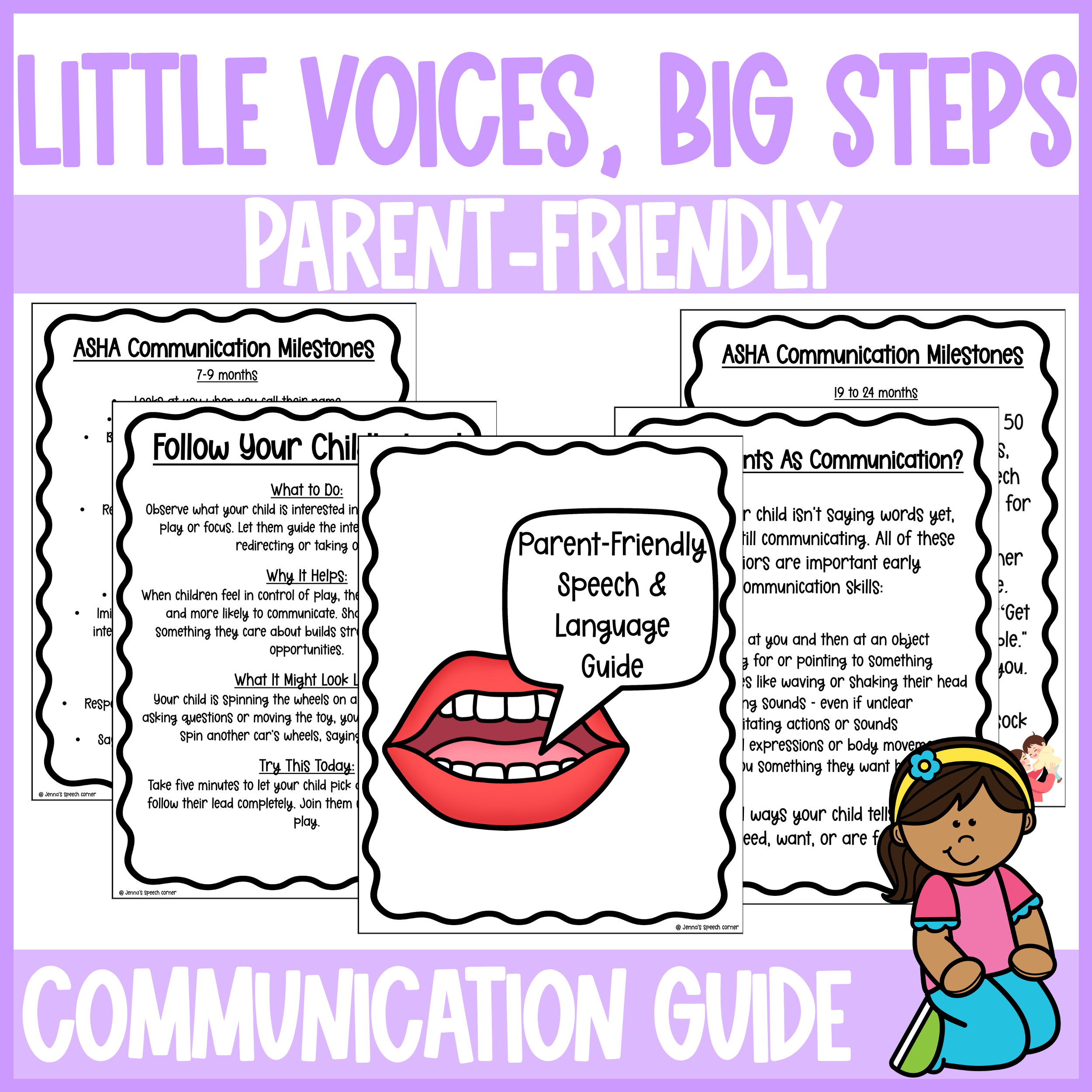
Carefully designed with busy parents and early intervention teams in mind, this guide explains what counts as communication, how to support it with research-backed strategies, and when to reach out for extra support. It includes ASHA-aligned milestones, a trackable communication log, and warm, approachable visuals to help families feel supported, not overwhelmed.
What’s Included:
A clear explanation of what “counts” as communication (gestures, sounds, words, and more)
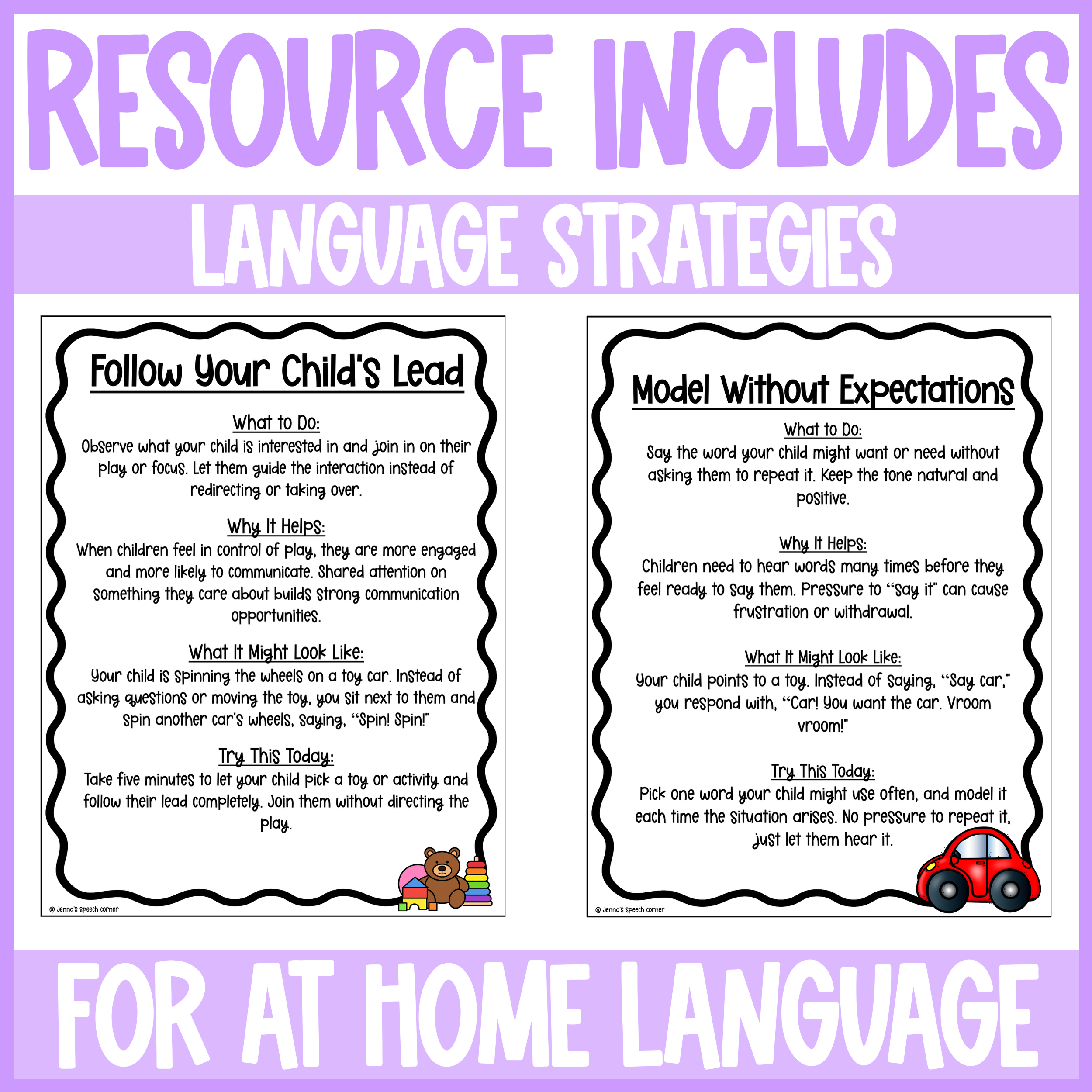
Over 8 caregiver-friendly communication strategies, each broken down into:
What to do
Why it helps
What it might look like
Try this today
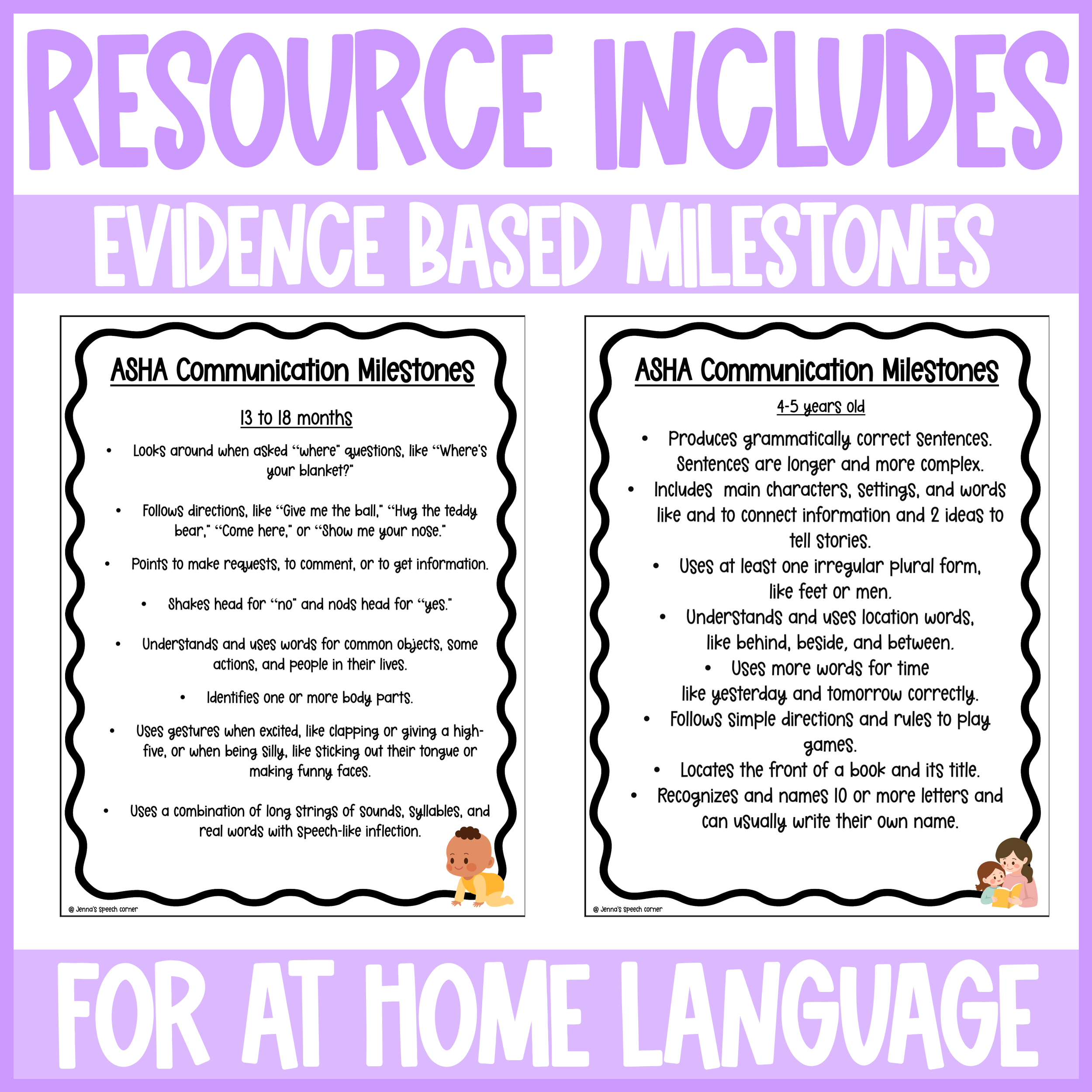
ASHA speech and language milestones for children from birth to 5 years
Simple signs that it may be time to connect with a speech-language pathologist
“Next steps” guidance to move forward with confidence
A printable communication log to track how and when your child communicates, what activity was occurring, and what strategies may be working
Cute, approachable clipart and a friendly layout designed to put caregivers at ease
Why You’ll Love This Resource:
Perfectly parent-friendly: written in warm, everyday language with zero jargon
Grounded in evidence and aligned with ASHA’s communication milestones
Encourages progress and clarity without causing unnecessary worry
Equips families with practical strategies they can use immediately
Created by a licensed speech-language pathologist with real-world experience
Who It’s Perfect For:
Parents and caregivers of infants, toddlers, or preschoolers
Speech-language pathologists working in early intervention or preschool settings
Early childhood educators and child development professionals
MTSS/RTI teams offering Tier 1 or Tier 2 supports
Any professional who needs a clear, printable communication development guide to share with families
How It’s Versatile:
Send home with parents as a printed handout or digital PDF
Use in intake packets, parent-teacher conferences, or family coaching sessions
Share during developmental screenings or pediatric appointments
Include in communication folders or IEP/IFSP documentation
Adapt pages for newsletters, parent nights, or caregiver workshops
How to Use It:
Review milestones with families during developmental check-ins
Introduce one or two strategies weekly and help families implement them
Encourage use of the communication log to track progress and strategy success
Use it as a conversation starter when concerns arise
Pair with speech-language screening tools or as a supplement to referral documentation
This isn’t just a speech handout—it’s a bridge between awareness and action. Whether you're a caregiver seeking peace of mind or an SLP providing tools for home, this guide turns concern into confidence. Once you use it, you’ll want it ready to go in every early childhood folder, screening toolkit, or family meeting.